

How many times have you treated a condition — only for it to return again?
- Recurring respiratory infections.
- Eczema flare-ups that calm down but come back.
- IBS symptoms that improve temporarily but never truly resolve.
- Mood instability that keeps resurfacing.
Many people believe they simply have “weak immunity” or a “sensitive body.”
But what if the real issue is something deeper — a persistent, disease-associated gut dysbiosis that was never properly corrected?
Most probiotics on the market are broad and general. They may temporarily support gut health or reduce inflammation. But they are not designed to correct the specific dysbiosis pattern driving a particular disease.
That is why symptoms improve — but eventually return
G-NiiB was built on a different philosophy:
- Identify the specific gut dysbiosis linked to a disease.
- Correct it precisely.
- Break the recurrence cycle.
- Reduce severity over time.
This is not symptom management.
This is microbiome correction at the disease-biology level.
Why G-NiiB Is Different
Scientists and clinicians at The Chinese University of Hong Kong (CUHK) used Metagenomics-Driven AI technology to map gut bacteria patterns in thousands of patients.
They identified:
• The harmful bacteria driving disease
• The protective bacteria that were missing
• The exact imbalance sustaining recurrence


These insights led to the development of targeted microbiome correction formulas – each designed to address a specific disease-associated dysbiosis pattern.
Because when the dysbiosis is corrected, the recurrence cycle can be reduced.
Struggling with Recurrent Respiratory Infections? The Problem May Not Be Weak Immunity.

In Malaysia, respiratory infections are becoming increasingly recurrent.
URTIs return every few months. Coughs linger longer. Recovery feels incomplete.
At the same time, tuberculosis (TB) cases in the nation are rising, with many individuals carrying latent infections that can reactivate when immune regulation becomes unstable.
This pattern raises an important question:
What if the issue is not weak immunity — but mis-regulated immunity originating from the gut?
The gut is home to over 70% of the body’s immune system. When disease-associated gut dysbiosis persists, immune signalling along the Gut-Lung Axis becomes distorted.
This can lead to:
- Excess inflammation
- Poor viral and bacterial clearance
- Increased susceptibility to repeated infections
- Incomplete immune recovery after illness
Most immune supplements – Vitamin C, zinc, herbal extracts – temporarily stimulate immunity.
General probiotics may support digestion.
But they do not correct the specific gut dysbiosis driving respiratory immune imbalance.
That is why infections keep coming back.
SIM01 – Targeted Gut-Lung Axis Correction
SIM01 was developed using metagenomics analysis to identify the specific gut bacterial imbalance associated with recurrent respiratory infections.
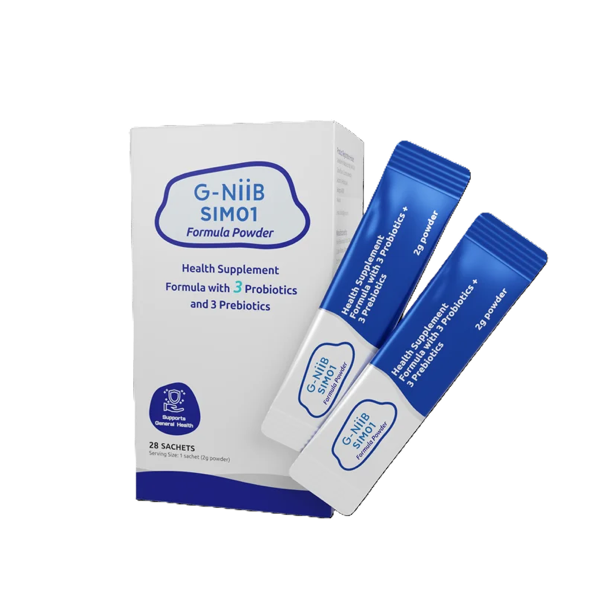
By restoring beneficial immune-regulating bacteria and correcting the dysbiosis pattern involved in respiratory susceptibility, SIM01 helps:
- Stabilise immune signalling
- Improve mucosal defence
- Reduce excessive inflammatory response
- Support more complete recovery
With consistent use, SIM01 helps reduce the recurrence cycle and supports stronger long-term respiratory resilience.
It is not a temporary immune boost.
It is microbiome correction for immune stability.
Concerned About IBS Symptoms or Colorectal Risk? The Gut-Colon Axis Matters.
Colorectal cancer (CRC) does not develop overnight.

It is increasingly understood as a long-term process influenced by chronic inflammation, microbial imbalance, and disruption of the intestinal barrier.
Research has identified specific bacterial DNA markers, such as Fusobacterium nucleatum, Peptostreptococcus anaerobius, and Clostridium hathewayi — that are associated with increased colorectal risk and persistent gut inflammation.
When these harmful bacteria increase and protective bacteria decline, a disease-associated colon dysbiosis develops.
This dysbiosis contributes to:
- Low-grade mucosal inflammation
- Barrier dysfunction
- IBS-type symptoms
- Increased CRC-associated biomarker expression
Many digestive supplements focus on symptom relief – improving bowel movement or reducing bloating.
However, symptom relief alone does not necessarily modify the underlying dysbiosis pattern linked to colorectal risk.
SMT04 – Precision Correction of CRC-Associated Dysbiosis
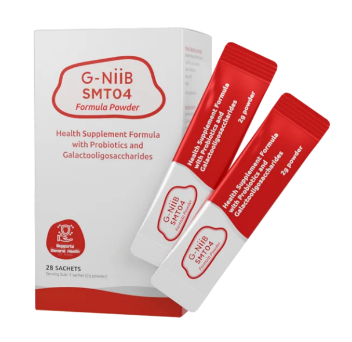
SMT04 was developed using metagenomics-driven analysis to target the specific bacterial imbalance associated with colorectal risk.
In clinical studies, SMT04 demonstrated reduction in CRC-associated bacterial DNA markers [1], reflecting measurable microbiome correction rather than general digestive support.
By restoring protective bacteria and reducing harmful strains linked to colon inflammation, SMT04 supports:
- Healthier microbial balance
- Improved mucosal barrier integrity
- Modulation of pro-inflammatory signalling
- Reduction of disease-associated bacterial markers
This is not a laxative.
It is not a generic probiotic.
It is a targeted microbiome solution designed to address colon dysbiosis at a biological level.
Early-Life Persistent Eczema and the Gut-Skin Axis
Childhood eczema is increasingly recognised as more than a skin condition.
Emerging research shows that early-life gut dysbiosis can influence immune development, skin barrier maturation, and inflammatory regulation.

In many children, eczema improves temporarily with topical steroids or moisturisers – yet flare-ups recur.
This pattern suggests that while surface inflammation is suppressed, the underlying immune dysregulation may persist.
Studies have shown that children with eczema often exhibit:
- Reduced beneficial gut bacteria
- Altered immune-modulating microbial metabolites
- Increased inflammatory signalling
This imbalance along the Gut-Skin Axis may contribute to recurring flare cycles
SIM03 – Targeted Early Microbiome Correction
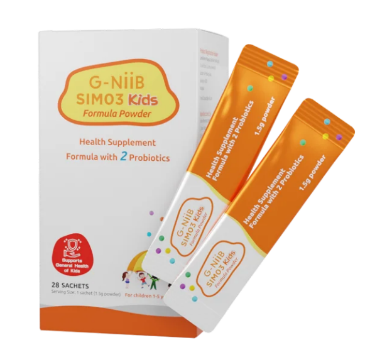
SIM03 was developed to address disease-associated gut dysbiosis observed in childhood eczema.
By restoring key immune-regulating bacteria and supporting healthier gut barrier function, SIM03 helps:
- Support balanced immune development
- Modulate inflammatory response
- Strengthen gut-skin communication
- Reduce recurrence tendency over time
- SIM03 is not a steroid replacement.
It is a targeted microbiome approach designed to support long-term immune stability from the gut.
Can’t Get Rid of Adult Eczema? Persistent Immune Dysregulation and Microbiome Imbalance
Adult eczema is often more chronic and inflammatory in nature.
Unlike childhood eczema, which may fluctuate with immune maturation, adult eczema frequently involves persistent immune dysregulation and long-standing gut dysbiosis.

Patients often experience:
- Recurrent flare-ups
- Partial response to steroids
- Relapse upon stopping treatment
This suggests that inflammation is being controlled symptomatically — but the underlying microbial imbalance remains uncorrected.
SIM05 – Precision Modulation of Chronic Gut–Skin Dysbiosis
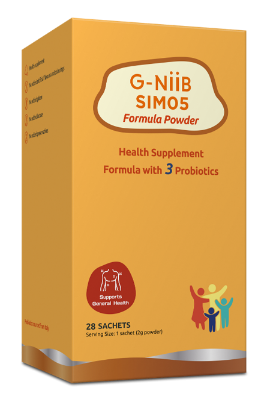
SIM05 was formulated to target the specific dysbiosis pattern associated with chronic eczema.
Through microbiome correction, SIM05 supports:
- Immune recalibration
- Reduction of inflammatory signalling
- Improved barrier resilience
- Decreased flare frequency over time
SIM05 does not function as an anti-inflammatory drug.
Instead, it supports long-term microbiome balance to reduce recurrence and stabilise the gut–skin axis.
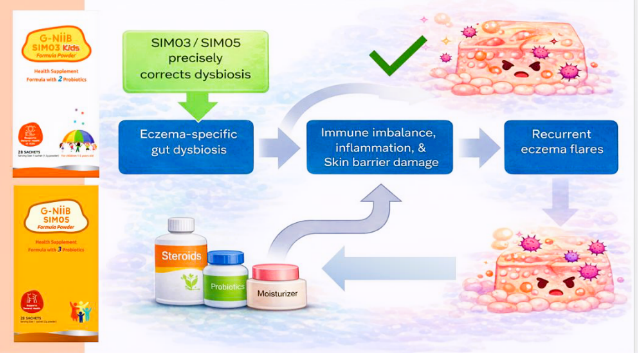
Here’s a snapshot of how both SIM03 and SIM05 work to correct gut dysbiosis and provide much-needed and sustained relief, unlike other treatments.
Supporting Emotional & Neurodevelopmental Health Through the Gut-Brain Axis

Children today face increasing academic stress, screen exposure, and lifestyle changes.
Some experience persistent digestive discomfort, irregular bowel habits, heightened anxiety, emotional reactivity, or difficulty concentrating.
A recent study reported that one in six Malaysian children between the ages of five and 15 are now affected by mental health issues [2].
While neurotransmitters such as serotonin, dopamine, and GABA are often discussed in mental health, emerging research shows that the gut microbiome plays a significant regulatory role in these signalling pathways.
The gut and brain are closely connected through the Gut-Brain Axis.
When disease-associated gut dysbiosis occurs, it may disrupt:
- Neurotransmitter modulation
- Stress-response regulation
- Inflammatory signalling
- Gut barrier integrity
This imbalance can influence emotional and behavioural stability over time.
SCM06 – Precision Modulation of the Gut–Brain Axis
SCM06 was developed using metagenomics-driven analysis to address specific microbiome patterns associated with neurodevelopmental and emotional dysregulation.
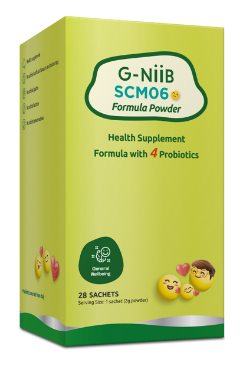
By restoring beneficial bacteria involved in neurotransmitter metabolism and immune modulation, SCM06 supports:
- Healthier gut–brain communication
- Improved stress resilience
- Balanced inflammatory signalling
- Greater digestive comfort
SCM06 is not positioned as a replacement for psychological therapy or medical treatment.
Rather, it provides targeted microbiome support that complements existing care by addressing gut-level dysbiosis.
How Is This Different from General Probiotics or Medications?
Many conventional approaches focus on adjusting neurotransmitter levels or managing behavioural symptoms.
While these approaches may be necessary and beneficial, they do not directly address underlying gut microbiome imbalance.
SCM06 focuses on microbiome modulation – supporting a healthier internal environment that contributes to emotional and neurodevelopmental stability over time.
Why Early Microbiome Support Matters
With increasing awareness of mental health challenges among Malaysian children [2], there is growing recognition that long-term resilience requires a multi-system approach – including gut health.
Supporting the microbiome early may help promote more stable gut–brain signaling and overall well-being.

Recurring conditions often reflect unresolved microbiome imbalance.
When disease-associated gut dysbiosis is left uncorrected, symptoms may improve temporarily – but the cycle continues.
G-NiiB’s targeted formulations are designed to address specific gut-organ axes, supporting microbiome correction at the biological level.
With consistent use, this precision approach helps reduce recurrence tendency and promote greater long-term stability.
Choose the formulation aligned to your condition, and support your body from the root.
References:
[1] The Effect of a Novel Probiotic Formula (SMT04) in Reducing Colorectal Cancer- Associated Biomarkers. Jessica YL Ching, Pui Kuan Cheong, Jessie Qiaoyi Liang. The E”ect of a Novel Probiotic Formula (SMT04) in Reducing Colorectal Cancer-Associated Biomarkers. J Pro