1. When “Common” Symptoms Are Not So Common
Many people experience digestive discomfort from time to time- diarrhea, bloating, or changes in bowel habits are often dismissed as something minor.
But what if these symptoms keep coming back, even after medication?
This is where it becomes important to pause and ask:
Is it really just digestion, or something more?
Colorectal cancer (CRC) is one of the most common cancers in Malaysia, and many cases are only diagnosed at later stages, when treatment becomes more challenging.
Yet, CRC is highly preventable and treatable when detected early.
2. The Warning Signs Your Body May Be Giving You
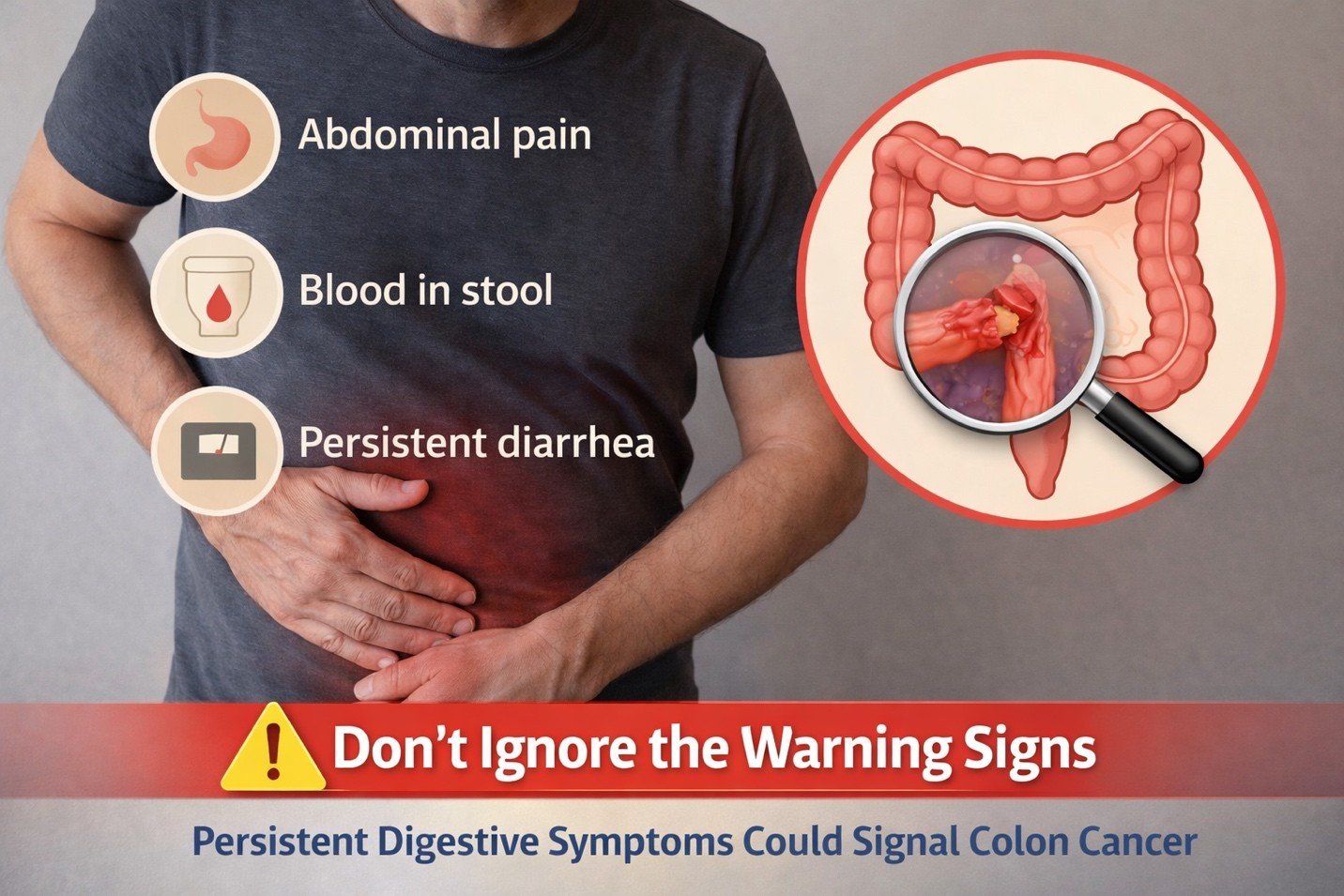
CRC does not always present obvious symptoms, but when symptoms appear, they are often persistent or recurring, not temporary.
Key symptoms that should not be ignored:
- Changes in bowel habits
(prolonged diarrhea, constipation, or alternating patterns). - Persistent diarrhea despite medication.
If symptoms do not improve with treatment, further evaluation may be needed. - Blood in stool or dark/black stools.
- Unexplained abdominal discomfort
(bloating, cramps, or incomplete bowel movement). - Unexplained weight loss.
- Fatigue or anemia
(which may indicate internal bleeding).
Key Message

It is not just the symptom, it is the persistence of the symptom that matters.
If it keeps coming back, it should not be ignored.
3. Why Early Screening Is Critical
One of the biggest challenges with CRC is that it can develop silently, without clear symptoms in the early stages.
This is why screening is essential.
Simple, non-invasive stool-based tests can detect early signs, often before symptoms even appear.

Early detection significantly improves outcomes and survival.
4. Looking Deeper: What’s Happening Inside the Gut

While screening helps detect early changes, it does not explain why these changes happen.
Emerging research shows that the answer may lie in the gut microbiome, the community of bacteria living in our digestive system.
Dysbiosis: When the Gut Loses Balance
When the gut microbiome becomes imbalanced (a condition known as dysbiosis), harmful bacteria can start to dominate.
Some of these bacteria have been linked to colorectal cancer, including:
- Fusobacterium nucleatum (Fn).
- Bacteroides fragilis.
- Certain strains of E. coli.
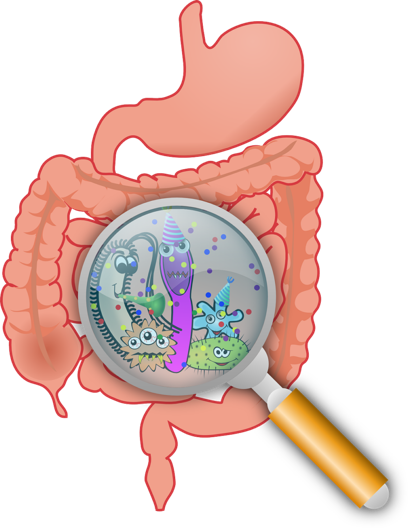
These bacteria may:
- Promote chronic inflammation.
- Damage the intestinal lining.
- Interfere with immune defense.
- Create an environment that supports disease progression.

This means CRC is not just a structural disease—it is also influenced by the gut environment
5. Restore CRC-specified dysbiosis: Are General Probiotics Enough?

With increasing awareness of gut health, many people turn to probiotics to improve digestion and restore balance.
However, an important question remains:
Are all probiotics designed to address the specific bacteria linked to colorectal cancer?
Most conventional probiotics are developed for general digestive support, adding “good bacteria” broadly, offering broad benefits such as improving gut comfort or regularity. But they do not specifically target harmful pathogens, and therefore may not address CRC-specified dysbiosis.
But in the context of CRC, the challenge is more specific:
- The presence of harmful, disease-associated bacteria (e.g. Fn).
- The need to correct targeted microbiome imbalance, not just add more bacteria.
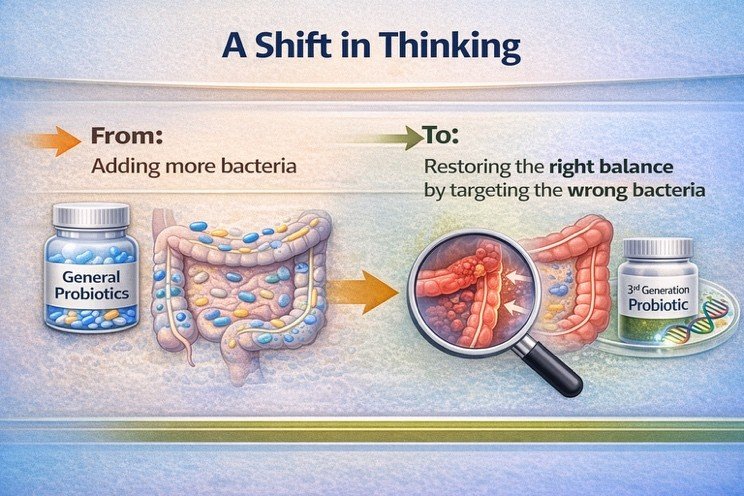
This is why a shift in thinking is needed for more precise, science-based approaches to microbiome health for CRC.
6. A New Era of Understanding: Metagenomics and AI
Advances in research, particularly from The Chinese University of Hong Kong (CUHK), have transformed how we understand the role of the gut microbiome in colorectal cancer.
Metagenomics: Mapping and Comparing the Gut at DNA Level
Using advanced DNA sequencing (metagenomics), scientists are now able to go beyond simply identifying bacteria.
They can compare the microbiome profiles of healthy individuals versus those with colorectal cancer, allowing them to:
- Identify CRC-specific dysbiosis patterns.
- Detect early imbalance before disease becomes clinically visible.
- Understand how different bacteria interact and influence disease progression.
Artificial Intelligence: From Data to Targeted Solutions
The gut microbiome is highly complex, involving thousands of bacterial species.
To make sense of this complexity, artificial intelligence (AI) is used to analyze large-scale microbial data.
AI enables:
- Identification of key disease-associated bacterial signatures
(e.g. Fusobacterium nucleatum and other CRC-linked markers). - Recognition of patterns that define CRC-specific dysbiosis.
- Selection of the most appropriate bacterial strains and combinations
to restore this imbalance.

In other words:
AI does not just analyze the problem—it helps design the solution.
From Discovery to Application
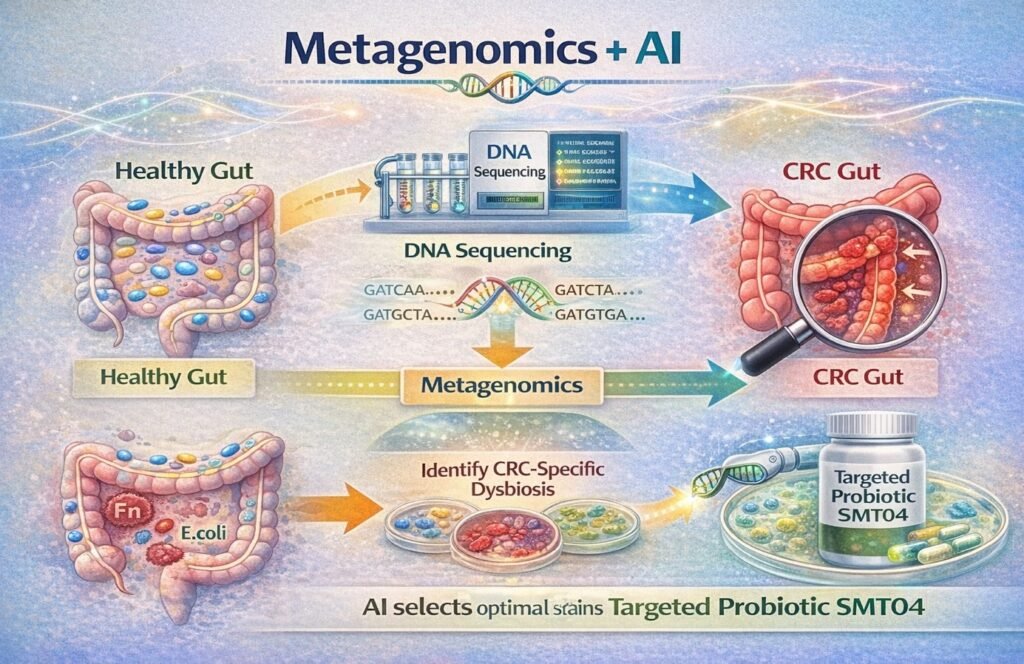
By combining:
- Metagenomics (to identify the imbalance).
- AI (to select the optimal bacterial solution).
Scientists can now develop targeted microbiome interventions that are tailored to specific conditions such as CRC.
7. Moving Beyond Symptom Relief: Targeting the Root Cause
If microbiome imbalance plays a role in CRC risk, then restoring gut balance becomes an important part of long-term health.
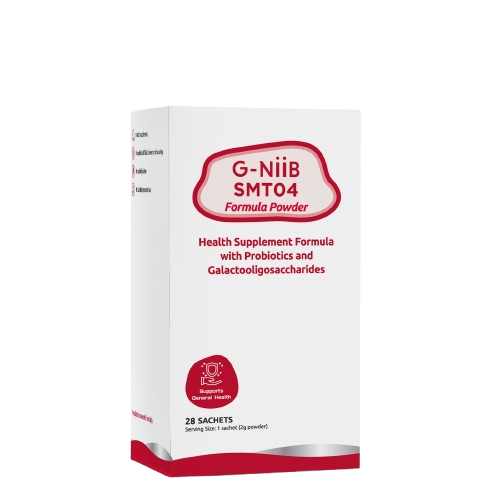
SMT04: A 3rd Generation Probiotic Approach
SMT04 represents a next-generation probiotic concept, designed to go beyond general gut support.
Instead of simply adding bacteria, it focuses on:
- Targeting microbiome imbalance.
- Supporting restoration of a healthier gut environment.
- Aligning with precision microbiome science.
How SMT04 Supports the Gut–Colon Axis
- Helps reduce harmful bacteria associated with dysbiosis
→ Supports a more balanced gut environment.
- Modulates gut inflammation
→ Reduces stress on the intestinal system.
- Supports long-term microbiome restoration
→ Promotes overall gut health.
Additional Benefit: Supporting Gut Stability During Stress
By improving gut balance, SMT04 may also:
- Help reduce discomfort linked to stress.
- Support better digestive stability.
8. A More Complete Way to Think About CRC
Understanding CRC today requires a broader perspective:
Not just:
- Symptoms
- Diagnosis
But also:
- Microbiome balance
- Early detection
- Long-term gut health
Key Takeaway
“When symptoms keep coming back, your body is telling you something. Don’t ignore it, act early through screening and better understanding of your gut. Go beyond symptom relief, restore the right gut balance for lasting protection.”
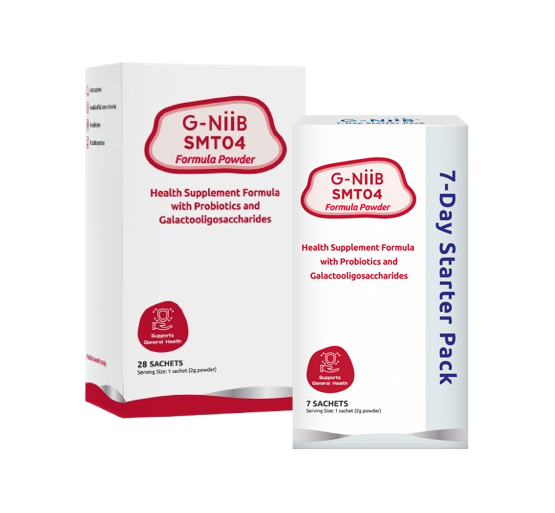
G-NiiB SMT04
3rd Generation Probiotics
Target the Root Cause for Long-Term Solutions